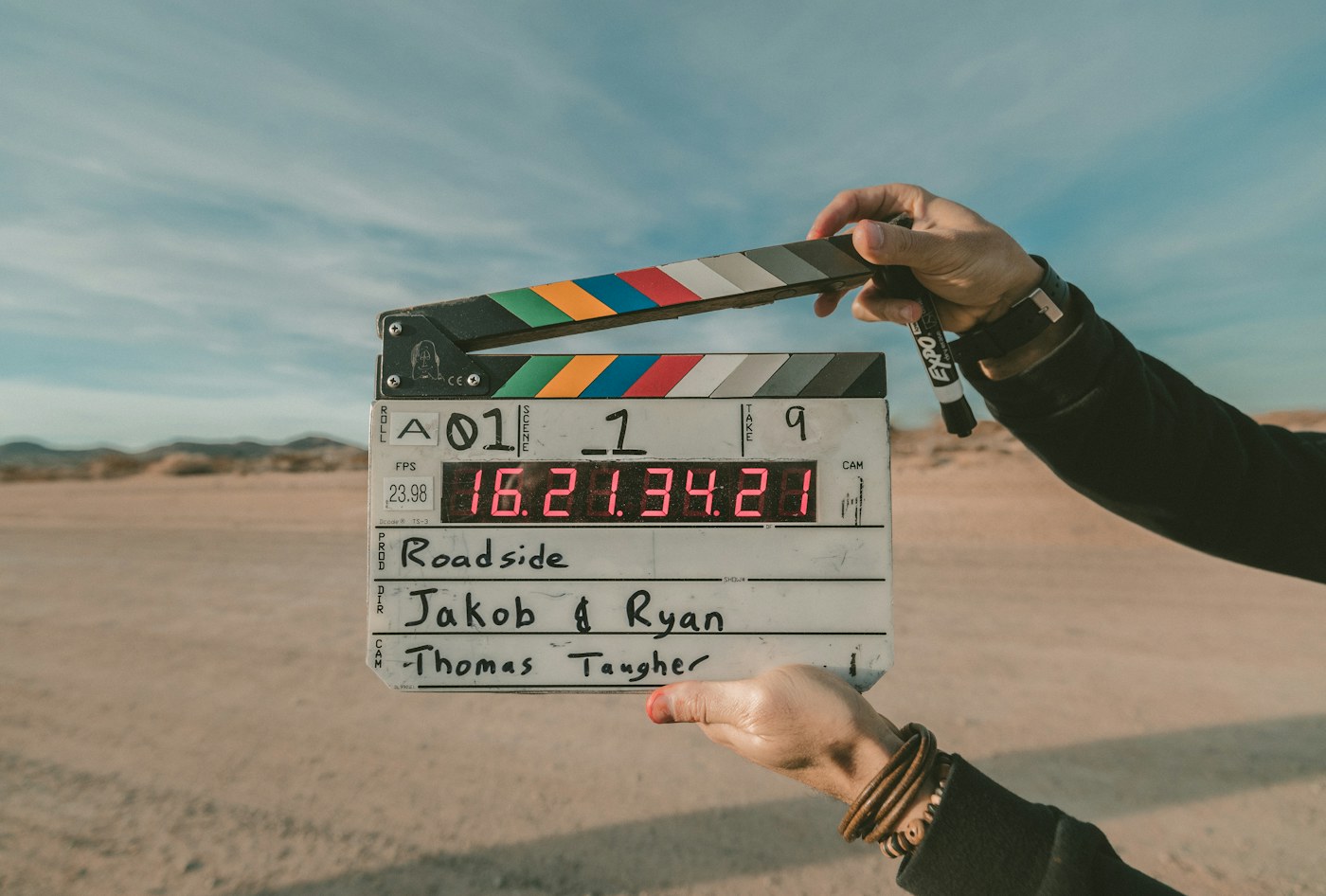
A longer video is not necessarily a clearer story. Before planning its duration, decide what the viewer needs to understand. A three-shot sketch can expose a missing idea faster than a long description.
Think of the sequence as an opening, a change and a consequence. These are editorial roles, not fixed rules about shot size or length.
Open with a useful piece of information
Your opening establishes something the viewer will need later. It can show a place, a subject or an object. Choose a frame that answers a concrete question: where are we, who matters, or what is about to change?
A wide shot is not always necessary. A close view of an unopened letter may establish the story more directly than a room full of details.
Make the change visible
The second shot should alter what the viewer understands. A hand picks up the letter. A character turns toward a doorway. A light goes out. Choose an action that creates a relationship with the opening.
Ask whether the change is visible without narration. If not, simplify the composition or split a complicated action into smaller pieces.
Give the consequence its own frame
The final shot shows what the change means. It can be a reaction, an empty space or an object now in a different state. It does not need to explain everything, but it should earn its place after the previous shot.
Use a planning table before generating anything:
| Shot | What the viewer learns | Main movement |
|---|---|---|
| Opening | A letter waits on a table | No movement |
| Change | Someone chooses to read it | A hand lifts the letter |
| Consequence | The choice matters | The reader pauses |
Check continuity without assuming it
When creating shots separately, compare clothing, props, light and background before placing them together. Consistency across generated outputs is not automatic. A reference or repeated description can be a useful input, but it does not guarantee an identical result.
Watch the sequence without sound. If the relationship between the shots is clear, you have a stronger base for timing, music and later editing.